
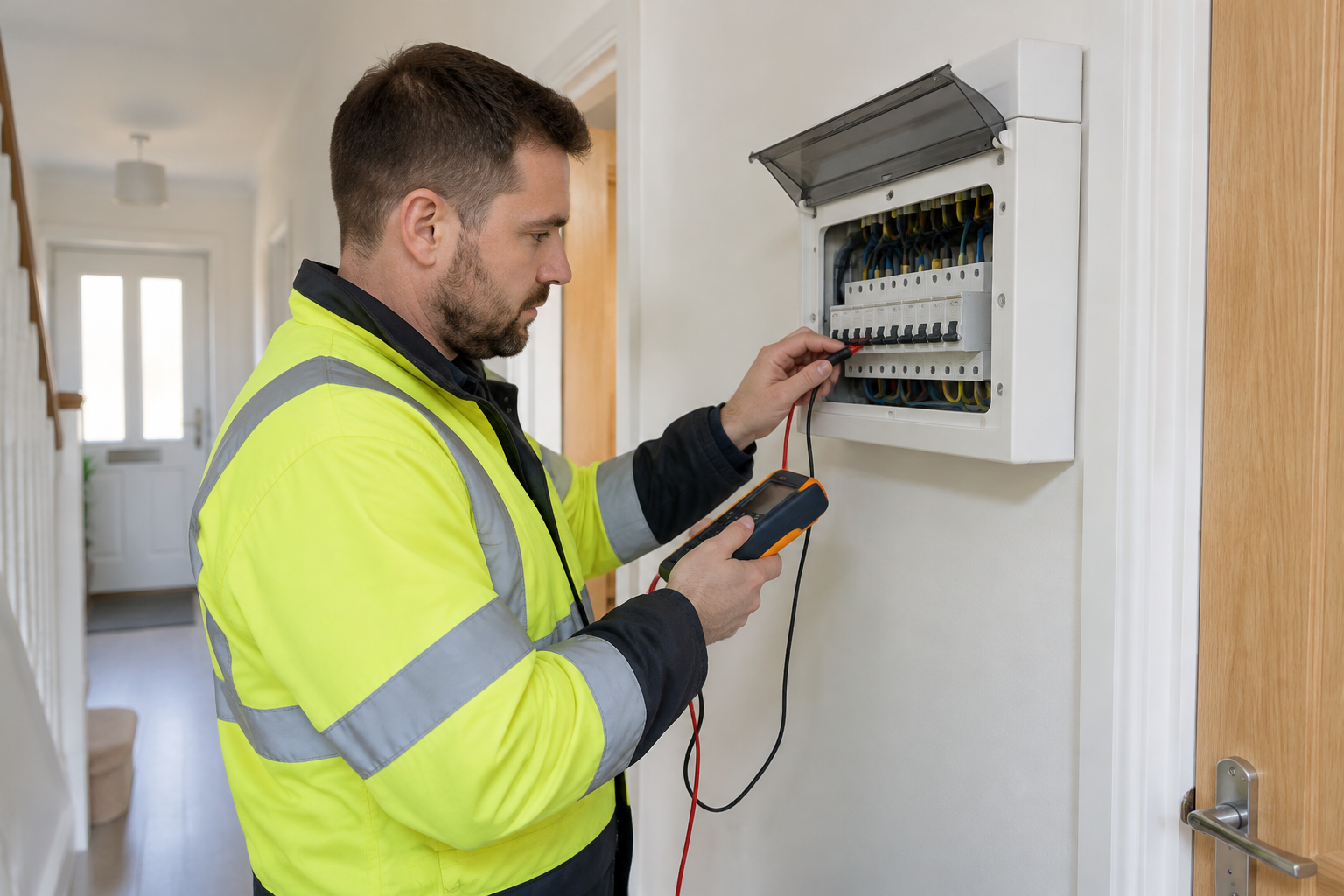
Quick Answer: Implementing a structured electrical maintenance schedule for Barnsley homes helps property owners stay ahead of sudden breakdowns, manage repair budgets more effectively, and address minor wear before it turns into an expensive emergency. While it does not eliminate all unexpected faults, routine testing provides a clear picture of your installation's condition, helping you plan ahead rather than reacting to a sudden outage.
For property owners and landlords across South Yorkshire, keeping electrical installations safe and functional is a vital part of property care. Rather than waiting for a tripping circuit, a burning smell, or a failing socket to force your hand, planned upkeep offers a structured, risk-based way to manage your property's electrical health. Backed by over 20 years of hands-on expertise from Redbrook Electrical Service LTD, managing your home's infrastructure proactively safeguards both your family and your finances.
Understanding Your Property’s Electrical Maintenance Schedule
An effective maintenance plan relies on clear timelines and regular checks rather than guesswork. How often you should inspect your home or building depends heavily on its occupancy type, age, and previous test history. Establishing a predictable routine prevents minor deterioration from compounding into catastrophic failures.
- Owner-Occupied Homes: Electrical Safety First recommends periodic inspection and testing every 10 years for owner-occupied residential properties, though older installations or properties undergoing major changes may benefit from more frequent checks.
- Rental Properties: Landlords in England must legally ensure that fixed electrical installations are inspected and tested by a qualified person at least every five years, adhering strictly to current government guidance for the private and social rented sectors.
- Commercial and Industrial Spaces: Workplaces require a tailored risk-based schedule. This accounts for environmental factors, heavy equipment use, and specific business operations, alongside routine portable appliance testing (PAT) where applicable.
Trigger points for an out-of-cycle check include purchasing an older property, completing a major renovation or extension, noticing persistent minor faults, or adding heavy-draw installations such as an EV charger or garden room circuit.
Inspection vs. Repair: What an EICR Actually Does
A common point of confusion for homeowners is understanding what an Electrical Installation Condition Report (EICR) covers. An EICR is an assessment of your fixed wiring, consumer unit, sockets, and permanent light fittings. It records observed wear, tear, and potential hazards, classifying any issues using standard safety codes:
| Classification Code | Meaning | Action Required |
|---|---|---|
| C1 | Danger present | Risk of injury; immediate remedial action required. |
| C2 | Potentially dangerous | Urgent remedial action required to make the installation safe. |
| FI | Further investigation required | Needs closer examination without delay to identify underlying defects. |
| C3 | Improvement recommended | Does not make the installation unsafe, but upgrading is advised for best practice. |
Crucially, an EICR is an inspection report, not a quote for remedial repairs, nor does it guarantee that no faults will ever develop in the future. If defects are found, property owners should request a separate, itemised quote for the necessary corrective work.
Warning Signs That Mean You Shouldn’t Wait
Even with a robust maintenance plan in place, everyday wear can manifest suddenly. Property owners should never ignore physical warning signs that suggest an electrical component requires immediate, competent assessment. Key red flags include:
- Persistent burning smells or scorch marks around sockets, switches, or the consumer unit.
- Frequently tripping circuit breakers or blown fuses.
- Lights that persistently flicker or dim unexpectedly.
- Damaged, frayed, or exposed cables.
- Warm-to-the-touch faceplates or switches.
When these symptoms appear, the Health and Safety Executive (HSE) advises removing affected equipment from use immediately and arranging for a competent professional to evaluate the issue.
How Proactive Upkeep Delivers Direct Cost Savings
Adopting an organised approach to property upkeep is not just about regulatory compliance; it is a proven financial strategy. Reactive call-outs for emergency electrical failures often carry premium call-out fees, especially if they occur outside normal working hours. By scheduling planned inspections during regular operating windows:
- You avoid emergency hourly labour rates levied by contractors during unexpected weekend or evening outages.
- You prevent minor wear—such as a loose terminal connection—from arcing and destroying adjacent circuit components or appliances.
- You maintain clear documentation of your home's upkeep, which supports property valuations and reassures prospective buyers during home-buyer surveys.
Partnering with Local Professionals in South Yorkshire
Managing electrical upkeep efficiently requires reliable local expertise. Redbrook Electrical Service LTD brings over 20 years of electrical-industry experience to domestic, commercial, and industrial projects throughout Barnsley and the surrounding South Yorkshire region. Based near the town centre, the team handles everything from routine periodic inspection and testing to consumer unit upgrades, rewires, and planned electrical maintenance.
Frequently Asked Questions
Is an EICR a legal requirement for an owner-occupied home?
No. While Electrical Safety First recommends a periodic inspection every 10 years for owner-occupied homes, it is not a direct legal mandate. However, it is a legal requirement for landlords in the private and social rented sectors in England to have fixed installations tested at least every five years.
Does an unsatisfactory EICR mean I need a full rewire?
Not necessarily. An unsatisfactory report simply means one or more C1, C2, or FI codes were identified. Remedial work might only involve replacing a faulty socket, upgrading an outdated consumer unit, or rectifying a specific circuit rather than a complete rewiring of the property.
Are remedial repairs included in the cost of an inspection?
Generally, no. An inspection and testing service covers the thorough assessment and reporting of your fixed installation. If defects are discovered, your electrician will provide a separate, itemised quotation for the remedial work required to bring the installation up to standard.
What is the difference between PAT testing and an EICR?
An EICR assesses the fixed wiring and electrical infrastructure of a building (such as sockets, cables, and the consumer unit). In contrast, Portable Appliance Testing (PAT) involves checking moveable electrical equipment and appliances plugged into sockets, based on risk assessments and workplace guidelines.
