
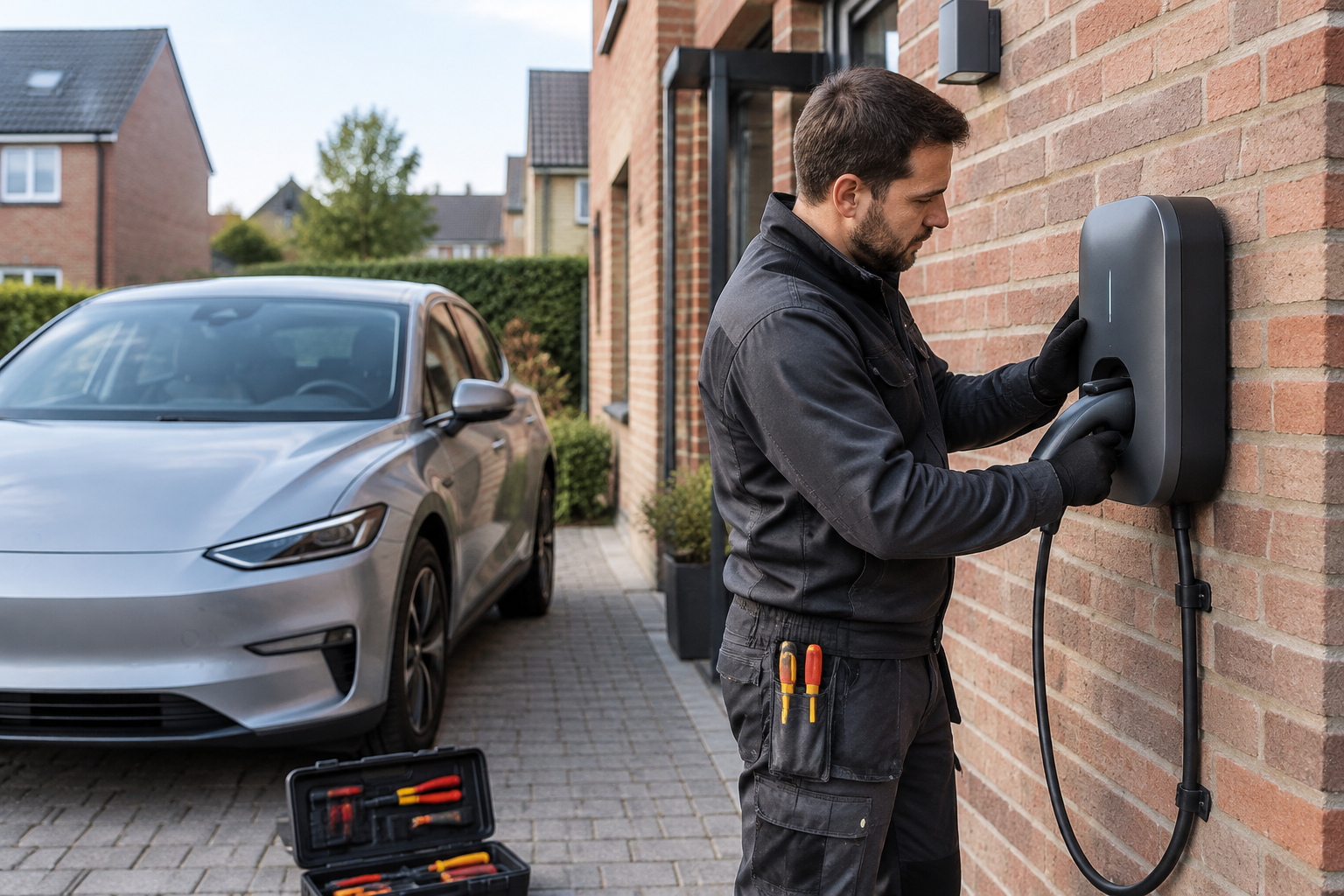
When planning an electric vehicle upgrade for a property in Barnsley, understanding the total scope of work, hardware choices, and compliance requirements is essential. Whether you are looking to install a single domestic wallbox or scale up to a multi-socket workplace setup, clear budgeting and proper electrical assessments prevent unexpected delays.
Researching EV charging installation costs Barnsley 2024 figures often highlights how variable pricing can be. Because every property layout, supply rating, and cable route differs, reputable contractors do not rely on flat-rate guesswork. Instead, professional installations require a site survey to evaluate your existing consumer unit, earthing arrangements, and available electrical capacity before providing an exact, transparent quote.
What Are the Average EV Charging Installation Costs in Barnsley for 2024?
For standard residential properties in South Yorkshire, homeowners typically find that total 2024 pricing spans certain transparent ranges depending on labour, complexity, and hardware selection. A straightforward home 7 kW smart wallbox installation generally ranges between £800 and £1,200, which includes both the certified unit and standard professional labour. However, if your property requires supplementary infrastructure adjustments, these figures will scale accordingly:
- Standard Home Wallbox (Supplied and Fitted): £800 – £1,200 for typical back-to-back installations on a single-phase supply.
- Consumer Unit Upgrade / RCBO Protection: £350 – £600 if your existing fuse board lacks spare capacity or mandatory surge and dedicated overcurrent protection.
- Complex Cable Runs or Groundworks: £150 – £500+ depending on whether armoured cabling requires professional trenching, long structural routing, or specialized sub-board installation for detached garages.
- Commercial Workplace Installations: £1,500 – £3,000+ per dual-socket commercial post or fast 22 kW three-phase charger, heavily offset where applicable via government grants.
What Factors Shape EV Charging Installation Costs?
When comparing installation quotes for homes or commercial properties, it is important to look closely at what is included. A standard straightforward installation typically covers the charger hardware, standard cabling length, basic wall drilling, commissioning, and safety certification. However, several variables can adjust the final cost:
- Cable Run Length and Route: Properties where the parking spot sits far from the main distribution board require longer runs of armoured cable, trenching, or specialized clips.
- Consumer Unit Upgrades: Older fuse boards often lack the necessary dedicated RCD protection and spare capacity required by modern electrical regulations (BS 7671), necessitating an upgrade or a small dedicated sub-board.
- Supply Capacity and Earthing: Assessing whether your property uses a single-phase or three-phase supply dictates charger output limits, while outdoor earthing design must comply strictly with IET wiring regulations.
- Grant Deductions and VAT: Depending on whether the project is residential (such as eligible renters or flat owners) or commercial (via the Workplace Charging Scheme), applicable grants or standard VAT rules will influence the final invoice total.
Comparing Charger Types: Which System Do You Need?
Selecting the right hardware depends on how you use your vehicle and what your property's electrical infrastructure can safely deliver. The table below outlines key charger configurations:
| Charger Category | Typical Power Output | Best Suited For | Key Considerations |
|---|---|---|---|
| Standard Home Wallbox (Single-Phase AC) | 7 kW | Most residential homes and overnight charging | Relies on standard UK single-phase domestic supplies. |
| Fast Workplace AC Charger | 7 kW up to 22 kW | Commercial fleets, staff parking, and business premises | 22 kW options typically require a robust three-phase commercial supply. |
| Tethered vs. Socketed Units | Variable | User preference and vehicle compatibility | Tethered units feature an attached cable for convenience; socketed units require a separate loose cable. |
How Do Planning, Permissions, and Approvals Work?
Navigating approvals involves looking at several separate criteria rather than a single universal permit:
- Planning Permission: Most standard residential chargepoint installations fall under permitted development rights, but listed buildings, conservation areas, or properties with restricted frontages may require local planning checks via Barnsley Council or the Planning Portal.
- Landlord or Freeholder Consent: If you rent your home or live in a leasehold property (such as a flat), you must secure formal written permission from your landlord or freeholder alongside any applicable grant eligibility evidence.
- Electrical Compliance: Installations must adhere to Building Regulations (such as Approved Document S for new builds or major works) and IET wiring guidelines, ensuring safe overcurrent and earth fault protection.
For professional guidance on upgrading your home or business infrastructure, visit our dedicated EV charging installation service page to see how Redbrook Electrical Service LTD can help.
Frequently Asked Questions
What is included in a professional EV charger installation quote?
A professional quote typically covers the specified charger hardware, standard cabling runs, wall penetrations, protective devices, professional testing, commissioning, and issue of electrical installation certificates. Additional works like consumer unit upgrades or long trench runs are usually itemized separately.
Can my existing home electrical supply handle a 7 kW charger?
Most modern UK homes with a standard single-phase supply can support a 7 kW wallbox, but an electrician must assess total household load, main fuse ratings, and earthing arrangements to confirm safety before installation.
Do I need planning permission to install a chargepoint at my house in Barnsley?
In most straightforward domestic scenarios, planning permission is not required under permitted development rules. However, restrictions apply if your property is a listed building, sits within a designated conservation area, or places the charger directly facing a highway without adequate boundary clearances.
How do workplace charging grants work for Barnsley businesses?
Eligible businesses, charities, and public sector organizations can apply for government support schemes such as the Workplace Charging Scheme (WCS), which helps reduce the upfront capital cost of purchasing and installing commercial socket infrastructure.
