
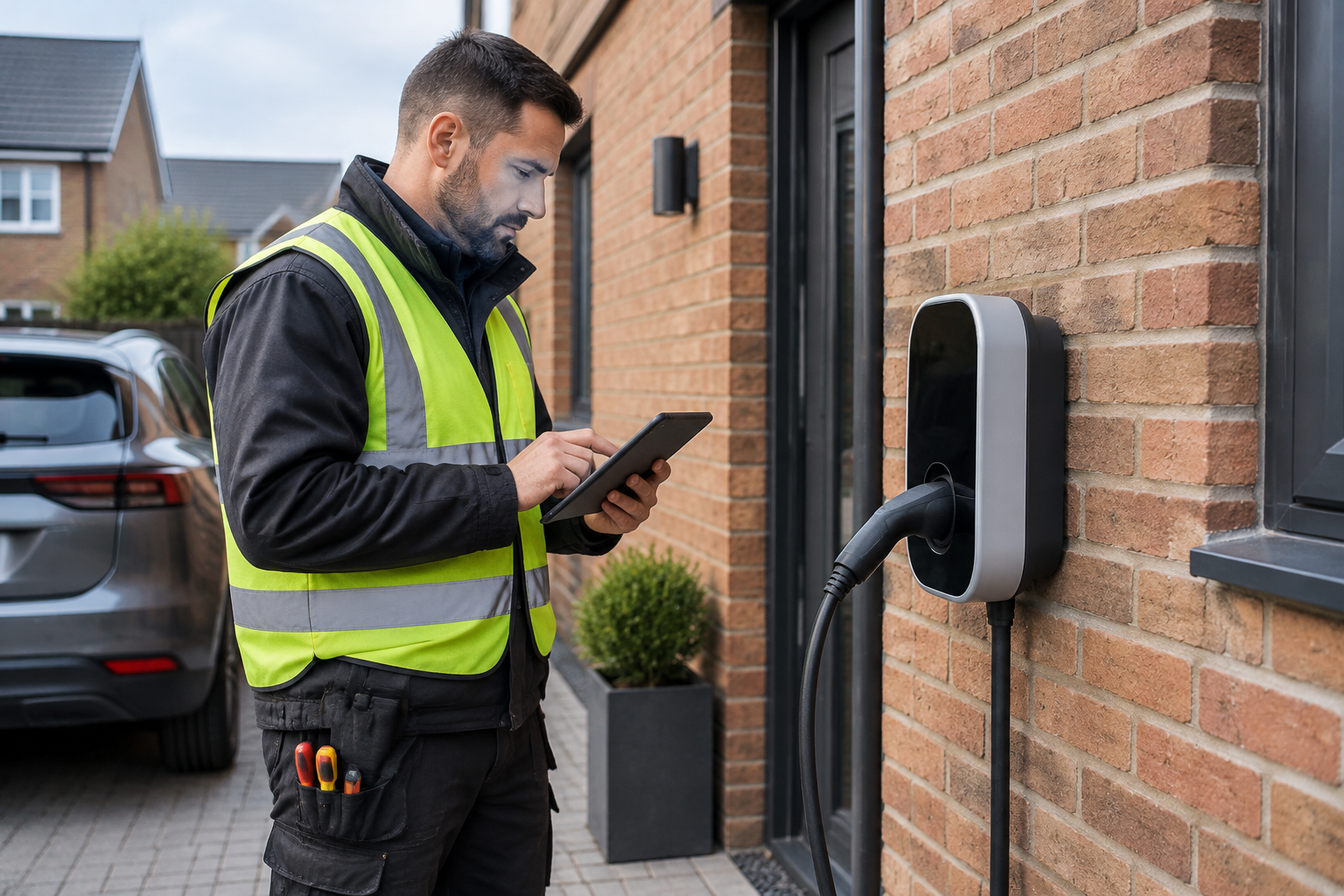
Planning an electric vehicle upgrade in South Yorkshire? Choosing a professional EV charger installation in Barnsley requires careful preparation, whether you are looking to charge a single vehicle at home or manage a multi-socket fleet infrastructure for commercial premises.
At Redbrook Electrical Service LTD, our experienced team provides approved EV charging support across Barnsley and the surrounding region. Drawing on over 20 years of electrical industry expertise, we help domestic, commercial, and industrial clients navigate site assessments, equipment selection, and compliance requirements safely. This comprehensive guide covers everything local homeowners and business operators need to know about preparing for, installing, and maintaining modern electric vehicle charging equipment.
Direct Answer: What Does EV Charger Installation Involve?
Professional EV charger installation involves evaluating your existing electrical supply, agreeing on a suitable chargepoint location, running dedicated cabling, mounting the hardware, and testing the system. Depending on your property layout and electrical capacity, minor upgrades or Distribution Network Operator (DNO) notifications may be required before commissioning.
Home vs. Business Pathways: Choosing the Right Solution
The requirements for a residential driveway differ significantly from a commercial car park. Understanding these differences ensures your setup meets your day-to-day needs without overspending on unnecessary infrastructure.
- Home Installations: Typically involve a single 7kW smart charger installed on a garage or exterior wall, offering convenient overnight charging paired with an off-peak domestic energy tariff.
- Business Installations: Often require multiple chargepoints, load-management systems to balance building power demands, RFID access controls, and structured billing for staff or fleet vehicles.
How Do You Prepare Your Property for an Electric Vehicle Upgrade?
A reliable installation always begins with a thorough survey rather than a one-size-fits-all package. Evaluating your property correctly prevents unexpected delays and ensures long-term safety. Here is what an electrical survey typically evaluates:
| Assessment Area | What It Checks | Potential Impact on Installation |
|---|---|---|
| Electrical Supply & Consumer Unit | Available load capacity and safety compliance of your current fuse board. | May require a consumer unit upgrade if capacity or RCD protection is insufficient. |
| Cable Route & Distance | The physical path from your electrical supply to the intended chargepoint location. | Longer runs or complex trenching require specialised cabling and additional labour. |
| DNO Notification | Registration of the new energy device with the local network operator. | Mandatory paperwork handled by your installer to ensure grid safety and compliance. Under Energy Networks Association (ENA) guidelines, standard 7kW single-phase home chargers require a post-installation notification submitted to your local DNO, while larger multi-unit commercial setups often require pre-approval. |
Hardware Choices and Smart Regulations
Selecting the right chargepoint depends on your vehicle capability, parking layout, and daily mileage. Key considerations include:
- Tethered vs. Socketed: Tethered units feature an attached cable ready to plug straight into your car, while socketed units require you to use your own loose cable.
- Smart Charging Features: Under UK regulations, private chargepoints must include smart functionality. This allows you to schedule charging sessions automatically during off-peak hours when energy is cheaper and cleaner.
- Solar Integration: Many modern smart chargers can integrate with domestic solar PV systems, allowing you to charge your vehicle using self-generated renewable energy.
Can You Get Government Grants for EV Charging?
Government funding is available through specific schemes managed via GOV.UK, though strict eligibility criteria apply:
- Flat Owners and Renters: Eligible flat owners, tenants, and single-unit residential properties using approved cross-pavement charging solutions can access specific grant support (subsidy caps are valued at up to £350 or up to 75% of the purchase and installation costs, subject to periodic GOV.UK reviews).
- Workplace Charging Scheme (WCS): Eligible businesses, charities, and public sector organisations can claim up to £350 per socket (capped at 40 sockets across all applications per applicant) towards the purchase and installation of commercial chargepoints.
Note that owner-occupiers of single private houses do not currently qualify for standard domestic installation grants. To learn more about domestic costs and financial planning, read our guide on EV charger installation costs and home grant options in Barnsley.
Frequently Asked Questions
Do I need to upgrade my fuse box to install an EV charger?
Not necessarily. A qualified electrician will inspect your existing consumer unit during the site survey to check if it has spare capacity and the correct safety devices. If your system is outdated, an upgrade may be recommended to ensure safe operation.
How long does a standard home EV charger take to install?
Most straightforward home installations take between two and four hours to complete. Complex runs, commercial setups, or properties requiring supply upgrades will take longer.
Will my installer handle DNO notification paperwork?
Yes. Reputable electrical contractors handle the required notification or application to the local Distribution Network Operator (DNO) on your behalf following installation.
Can businesses install chargepoints for staff and visitors?
Yes. Commercial installations can be configured with smart management software to track usage, restrict access via RFID cards, and bill users accordingly.
Sources and Further Reading
- GOV.UK: Electric vehicle chargepoint grants overview
- GOV.UK: Workplace Charging Scheme application guidelines
- Energy Saving Trust: Advice on charging electric vehicles
- Legislation.gov.uk: The Smart Charge Points Regulations 2021
